What happens today
Joints are torqued to a specification at assembly and re-checked on a periodic route or during a shutdown. Between checks, a joint that has relaxed looks exactly like a joint that has not.
Joint preload monitoring
BoltWatch measures tension at the joint continuously, so preload loss is caught while the bolted assembly is still holding, not at the next torque route. The sensing installs as part of the standard bolt-up and runs on its own battery.
A torque wrench measures the effort needed to turn a nut and infers preload through a friction relationship that moves with thread condition, lubrication and reuse. A joint can torque correctly and still be under-tensioned. And a torque check is one moment in time, so it says nothing about the preload that will remain after a month of vibration.
Joints are torqued to a specification at assembly and re-checked on a periodic route or during a shutdown. Between checks, a joint that has relaxed looks exactly like a joint that has not.
BoltWatch reports tension at the joint continuously. Loss of preload raises an alarm while the clamped component is still seated, which is the interval in which re-tensioning is a maintenance task rather than a repair.
A sensing element in the bolt-up, a battery node, and a tension record per joint.
A tension-sensing element that installs as part of the standard bolt-up sequence, so fitting it is part of the job the crew is already doing rather than a separate instrumentation task.
A wire-free, battery-powered node that reads the joint and reports over the plant network, so a joint on a vibrating structure needs no cable, no junction box and no penetrations.
Tension against time per joint, with the alarm point set from the joint's own specification, so a relaxation trend is visible before the assembly moves.
BoltWatch ships as a sensing element and node per monitored joint, with a gateway option and the record store that holds tension history for the joint set.
The record below is a sample joint trend. It shows the sequence that matters: tension falls away from the fitted value while the torque specification is still nominally met. The sample is illustrative and is not customer data.
Sample record. Values are illustrative and are not customer data.
The moat is the direct tension series per joint. Once a site has fitted-value and relaxation history for its critical joints, the inspection interval and the alarm point stop being estimates from a generic standard.
BoltWatch reports tension at the joints where a sensing element is fitted, so coverage is per joint and not per assembly. It does not measure torque and does not replace the assembly torque procedure. A joint whose element has failed or whose node has gone quiet is unmonitored, which the record shows as a gap rather than as a healthy joint. The kit is built to order, and supply timing is confirmed in the written quotation.
BoltWatch measures and reports what its sensors see. That is monitoring, not a compliance or safety certification: the log is evidence of what the equipment recorded, and nothing on this page, in the quotation or on the invoice certifies your site, your process or your equipment against any standard.
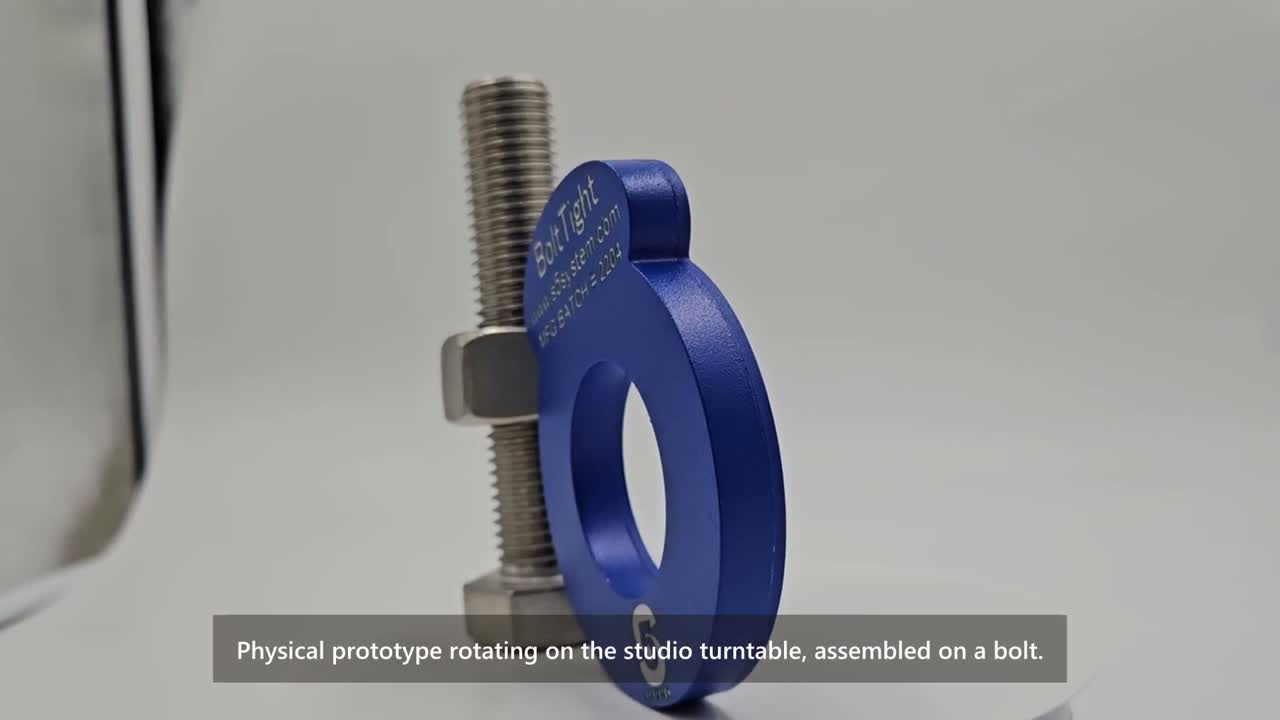
BoltWatch, on film. The video plays from YouTube only when you press play; until then this page requests nothing from anyone else.
Telemetry shown is illustrative — default values, not a measured test. Physical prototype. Not a field installation. Watch on YouTube (opens youtube.com).
One product page S5 owns. The first 3 years of service are included in the up-front project price; from year 4 the subscription is A$10 per site / month. The hardware and the scope are quoted against a site assessment, and the quotation carries that figure. Nothing is sold directly from this page: the listed price is recorded through a written quotation, and the quotation states the lead time, the freight and the payment terms for your site.
| Piece | What happens | Status |
|---|---|---|
| Quotation | A written quotation is issued for this page and the configuration shown | Issued on request |
| Buy now | Opens the quotation page: the listed price is recorded against a written quotation, no order, no payment | A$10 held |
| Lead time and freight | Stated in the written quotation for your site | Confirmed in the quotation |
| Commercial quote | A quotation reference is issued for this page and configuration | Instant, same page |
| Subscription, from year 4 | The first 3 years are inside the quoted price | Not charged today |
One email address and your configuration, and the quotation for this BoltWatch build is issued against this page. No account, no sales call required.
Direct answers to the questions buyers, installers and AI search tools ask about BoltWatch.
Torque measures the effort applied to turn a nut, and it only relates to preload through friction in the threads and under the nut face. Lubrication, thread condition, plating and reuse all change that friction. A joint can meet its torque specification while carrying materially less tension than the design assumed, which is why a torque pass is not evidence that the joint is tight.
The sensing element is fitted as part of the standard bolt-up at the joints that matter, and it reports the tension the joint is actually carrying. Coverage is per fitted joint rather than per assembly, which is why the first engineering step is choosing the joints whose relaxation would matter most. The rest of the assembly keeps its normal torque procedure.
BoltWatch suits joints where preload loss matters and a periodic torque check is weak evidence: vibrating rotary equipment, crushers and screens, structural steel connections, lighting and communication towers, and heavy civil structures. On a static joint under no dynamic load, a torque check plus a visual inspection may well be sufficient and BoltWatch is not needed.
Fitting happens inside the standard bolt-up, so it adds a step to a job the crew is already doing rather than creating a separate instrumentation task. The torque or tension procedure still applies. What changes is that the joint's tension is then recorded instead of being assumed from the wrench reading at one moment in the assembly.
Tension falling away from the fitted value raises an alarm at the threshold set for that joint. The alarm point comes from the joint design rather than from a percentage of the first reading, because a joint that was under-tensioned at fitting must not define its own healthy state. The response is a re-tension and a note on the joint, and a joint that relaxes twice is evidence the joint design needs review.
No. The node is wire-free and battery-powered, which is the reason it can be used on a vibrating structure, a tower or a bridge where running cable would be a significant civil job. Battery state is reported with the readings so a replacement can be planned before a node goes quiet, rather than discovered when someone asks why a joint stopped reporting.
BoltWatch is quoted per joint, because the sensing element, the joint size and the number of nodes vary with the assembly. The quotation states the fitted element, the node count, and the first 3 years of the subscription, and it separates installation support. Nothing is charged on this page; Buy now only records the price against a written quotation.
No. BoltWatch reports tension and raises an alarm on preload loss; it does not certify a joint, and it is not part of a certified safety-instrumented function. Structural adequacy remains the responsibility of the engineer of record and the site's inspection regime. The product exists to make relaxation visible between inspections, not to replace the engineering that set the joint specification.
BoltWatch is quoted per site for the hardware and the scope described here. The first 3 years of service are included in the up-front project price; from year 4 the subscription is A$10 per site / month. The quotation is issued against the site assessment and states the delivery, invoicing and payment terms before anything is committed.
BoltWatch ships as a kit: BoltWatch ships as a sensing element and node per monitored joint, with a gateway option and the record store that holds tension history for the joint set. No S5-designed radio enclosure is required, because the site gateway is a finished product bought off the shelf. Installation is a guided self-install, and the site needs mains power or the supplied battery option at the gateway location.
BoltWatch is quoted against a written commercial quotation. The quotation states the configuration, the price, the lead time and the freight for your site, and sets out the ordering, invoicing and delivery terms before anything is committed.
Use the “Get instant commercial quote” form on this page, which needs only your email address and your configuration choice. The store records the request against the boltwatch subdomain and issues a quotation reference, so the enquiry is traceable rather than lost in a mailbox. You receive the quotation for the configuration and price shown; nothing is ordered and nothing is charged until you accept it, and the Request a quotation button is what records your interest.
A BoltWatch failure is recorded as evidence and handed to the operator, not silently retried. The record keeps the measured values, the time of the event and the limit that was crossed, and the response is a documented action by your team, not an automatic decision by the device. A missing reading is treated as a missing data point, not as a pass.
Service desk, S5 System Pty Ltd. A support engineer answers, usually within one business hour.
WAWhatsAppMessage or call +61 468 728 893 TGTelegramCall or chat +61 468 728 893 ☎Phone+61 468 728 893Talk to an S5 engineer about whether BoltWatch fits your site. Pick a time that suits you. The call is free and there is no obligation.
Questions on fit, price, setup or commissioning? A support engineer replies to every enquiry.
One email a month: what actually failed, what the sensors caught, and what it cost. No product pitches.